
Louisiana State Police Arrests
Louisiana State Police is the agency's full name. LSP is the short form everyone uses. Its public material is sorted into troop sections and statewide news. That layout helps you figure out which office handled an event. It does not make LSP a statewide jail operator. Booking records stay with parish sheriffs and other local custodians who run the facilities where people are actually held.
The statewide newsroom earns its keep when an arrest ties to a major investigation, a fugitive case, a serious crash, or another event the agency chose to publicize. A name in an LSP release tells you little on its own. Custody status, release, and later court outcomes live in separate records kept by different public offices.
Where LSP Arrest News Appears
Start with the official LSP News Releases index for statewide arrest news. Troop-specific news pages offer other doors into the same system. Keep expectations in check, though. These are selected stories. They are not a complete list of people arrested by LSP or a daily booking count.
| Official source | What it can show | Coverage limit |
|---|---|---|
| LSP News Releases | Dated accounts of selected investigations, arrests, crashes, and enforcement events. | Not a complete arrest or dispatch log. |
| Statewide News Releases | Announcements published for statewide distribution. | Still a release feed, not a booking roster. |
| Troop A, Troop G, and Troop I | Troop-level news that can help locate a local event. | Only the releases posted by that troop. |
| Daily arrest or dispatch log | No public LSP daily arrest log or complete daily dispatch log was located. | Do not treat newsroom results as a full day’s activity. |
The LSP newsroom's dated entries show how the agency frames the arrest and enforcement stories it picks to publish. It's a news feed, not a booking list or a gallery of mugshots.
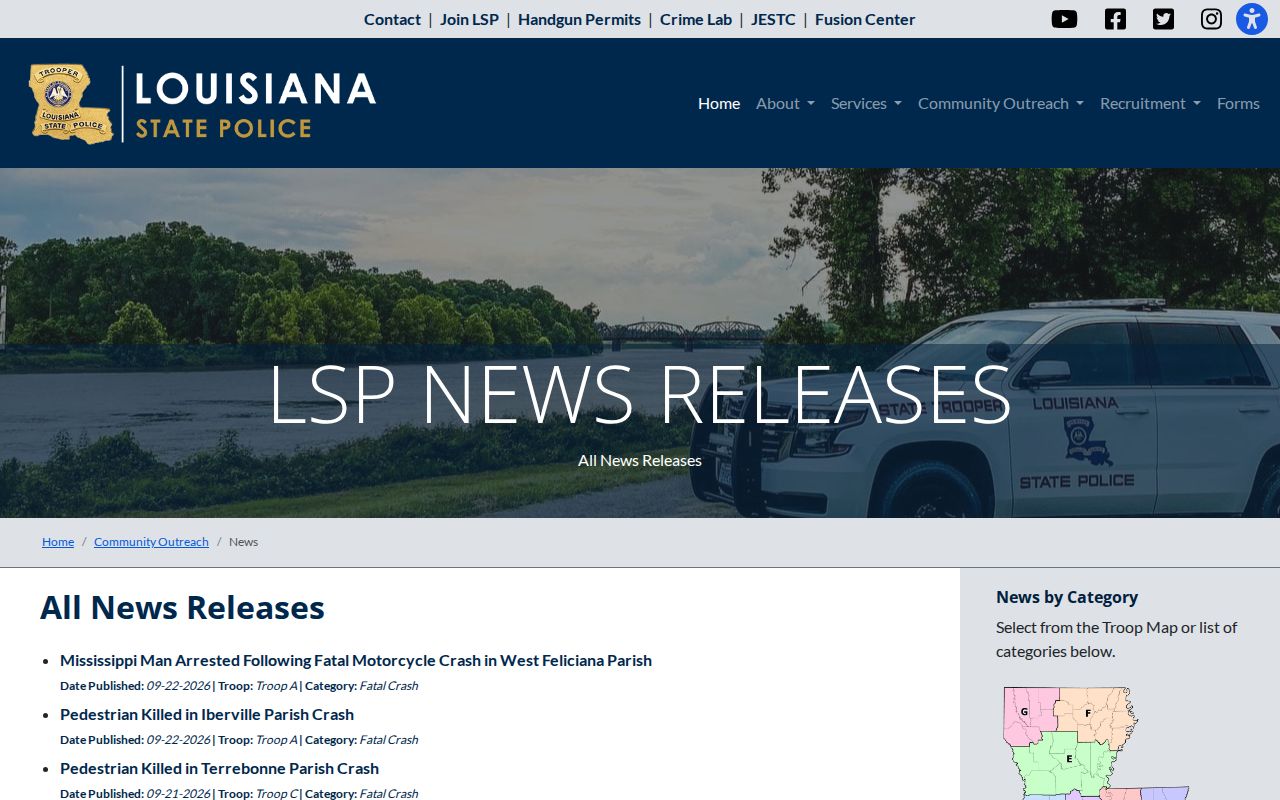
A release explains an event. It won't work as a live custody check or a full roster of everyone arrested.
Find an LSP Arrest Record
Treat a recent LSP arrest release as a lead. Then hunt down the parish or local facility it names. The booking agency is the better source for a custody entry or booking photo. What if the release names no booking location? That gap proves nothing. Contact the records custodian for the agency or parish tied to the event.
- Search the LSP newsroom by the event, person, or likely troop. Read the release date and the details in the full story.
- Check the official troop information page if the release identifies a troop or region. Troop coverage helps route a question, but does not identify a current jail by itself.
- Use the parish named in the release to reach its local booking source. The Louisiana Parish Directory routes to parish-level recent-arrest resources; the local roster is the relevant custody check.
- If a same-day local view is not clear, compare the roster with the source’s own date window. Louisiana’s Arrests Last 24 Hours page explains why a current-custody list and a last-24-hours report are not interchangeable.
A fresh booking may lag. It can take time before it shows in a public interface. Parishes also differ in what fields and photo views they present. A name match alone proves little. Compare the event, booking date, and parish, then ask the record custodian if doubt remains.
Note: A news release can trail an arrest or omit a booking location, so confirm custody with the parish source named in the record.
Where LSP Arrestees Are Booked
LSP releases often name the parish jail or law-enforcement center where a person was booked. That detail matters. The parish-level system, not any statewide LSP roster, is where a current booking record and any booking photo will surface. Transfers, releases, and other custody changes can make a roster drift from the original event report.
An LSP release about a Lafourche Parish investigation shows the pattern: the arrested person was booked at a parish facility while awaiting transfer or extradition. State police handled the event. Local custody holds the record. The example doesn't mean every LSP arrest lands in one jail or shows up in a public parish interface.
Booking location is the route to the record. Use the parish in the release. Check its local roster or records custodian from there.
For a correction or final case outcome, go to the responsible court's record. If the booking record isn't online, ask the parish custodian whether an inspection or copy request is available.
Request an LSP Arrest Report
LSP's Public Records Request page is the place to begin, and it links to the Louisiana DPS GovQA request portal, no, use the correct one: the agency home is not needed; the portal handles intake, archives, and request-center functions. Name the record clearly. A public booking entry, initial report, incident report, or news release all work. A blanket request for an entire investigative file can trigger law-enforcement exemptions.
Help the custodian find the right LSP record. Give the troop, parish, incident date or range, case number if known, the person's name, and your preferred format. Parish booking records go to the parish custodian, not LSP. A narrow request also keeps an arrest report separate from photographs, dispatch material, or an investigative file.
- Open the official LSP request page and follow its link to the GovQA intake.
- Name the record sought and provide the troop, parish, date, case number, and name when known.
- Ask the custodian to identify the legal basis for any withheld material and to provide any reasonably separable public portion.
- Review any estimate or response from the custodian. If the record belongs to the parish booking office, direct the request to that office.
Louisiana sets out the rules for inspection, copies, and enforcement in R.S. 44:32, R.S. 44:33, and R.S. 44:35. Booking data and initial reports get special treatment under R.S. 44:3. Parts of an investigative file can stay sealed. Fees vary by record and copy method. LSP posts no fixed arrest-report fee or promised turnaround, so plan for neither. The official LSP request page is the entry point. That route stands apart from parish jail systems and the crash-report process.
File through the portal for any LSP-held record. If the booking entry sits with a parish jail, follow up with that local custodian instead.
DUI and Enforcement Arrest Releases
LSP news releases cover traffic enforcement and DUI events. Drug and firearm cases appear. So do fugitive arrests, serious crashes, and special-victim stories. One representative Baton Rouge-area release describes a traffic stop. The stop led to an arrest on drug, firearm, and DWI charges. It shows the agency's format. It is not a log of every stop or every DUI arrest in Louisiana. There is no complete statewide table of LSP DUI bookings. The public pages also lack a day-by-day enforcement log. Treat each release as one event account. Read the wording closely. See whether it reports an arrest, a charge, a checkpoint, or a campaign. Checkpoint announcements can describe an operation without naming anyone stopped. A release may spotlight a fatal crash, a multiagency case, or a fugitive. Routine patrol work is less likely. Missing stories only mean no matching release appeared in that channel.
Note: LSP’s public news selection highlights events, so it cannot support a count of all arrests or DUI bookings across the state.
Troop Coverage and Parish Routing
LSP's troop-information page lists Troops A, B, C, D, E, F, and G. It also lists Troops I, L, and NOLA. Those labels help you follow regional releases and find the right troop page. Troop coverage is not a custody map. The booking destination still comes from the event report or the parish record custodian. The page places Troop A in the Baton Rouge area. Troop G covers the northwest. Troop L sits in the Florida-parish and northshore region. Use those as starting points only. Then check the official listing for the region tied to a specific case. Troop pages can carry their own release sections. Pair a statewide newsroom search with that troop source. The official LSP troop information page shows the full troop list and regional routes. Its troop interface helps identify the correct publication area whenever a release names a troop.
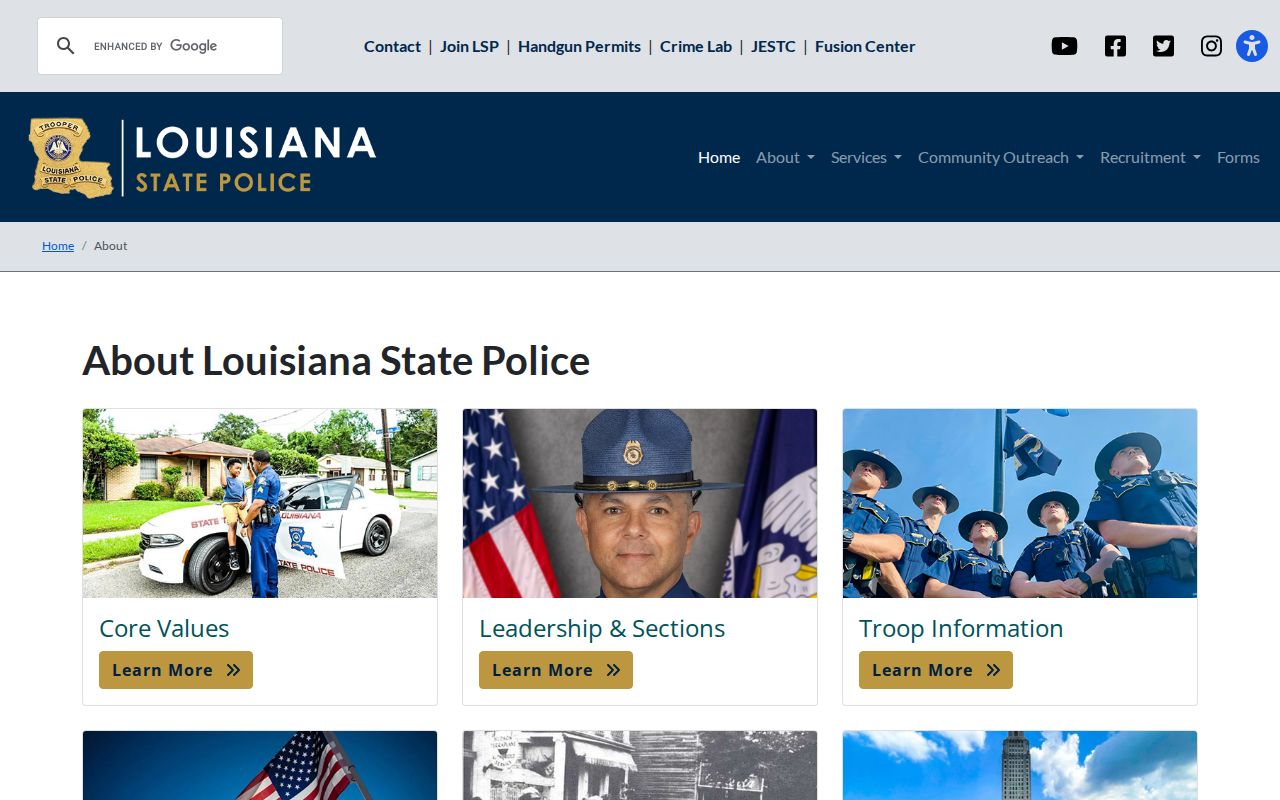
Once you find the troop, use the parish named in the release for local booking information. The troop label alone never shows current custody.
Crash Reports Have a Separate Process
A crash report is not an arrest report. That holds true even when the investigation ends in an arrest. LSP's Traffic Records Unit runs a separate channel. Crash records there carry their own form and fees. Keep that channel tied to the crash record itself. It sets no cost or timeline for a booking entry or arrest record. The unit asks for 15 working days after a crash. That window applies to crash reports only. It is not an LSP arrest-report promise or a deadline for other public-records requests. For an arrest or incident record, use the public-records route and ask the custodian directly. The Traffic Records Unit page and its crash request form spell out that separate path. When a crash led to an arrest, a requester may need two things. One is the crash report. The other is a booking or initial report from the proper law-enforcement custodian.
Arrest Records and Later Outcomes
Louisiana's public-records law keeps booking information and initial reports open while restricting certain investigative material. For custody or supervision after sentencing, the Louisiana Department of Public Safety & Corrections offers an inmate information locator. That tool covers the corrections stage. It is not an LSP arrest feed.
Note: Verify a charge and its outcome through the court record; a police release is not a finding of guilt.